Highfield Level 2 Award in Food Safety for Retail (RQF)
COURSE DURATION4 - 6 hours
TRAINING TYPEOnsite Training
TRAINING TYPEClassroom Training
COMPLIANCEEHO-Approved
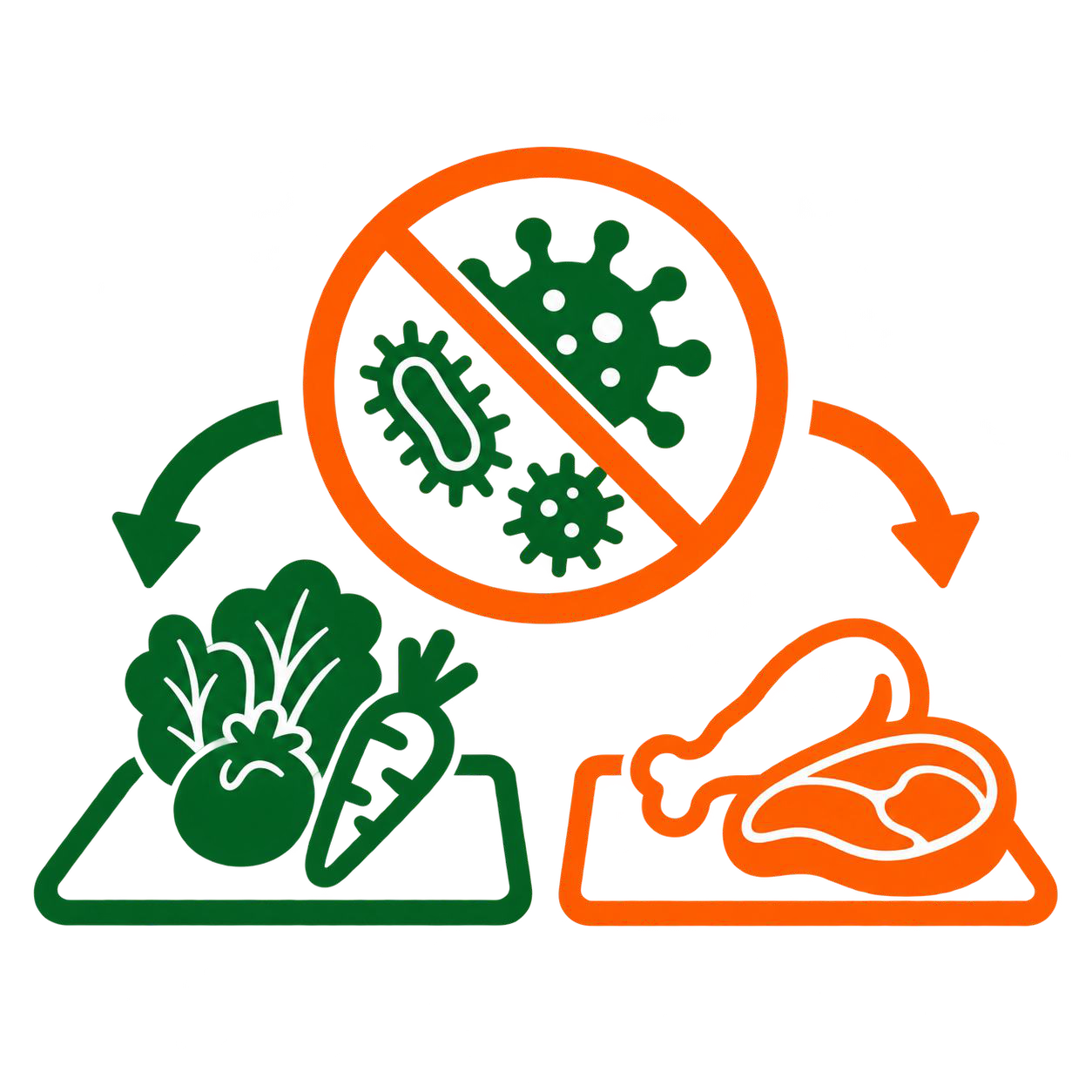
RESULTS100% Pass Rate
CERTIFICATIONFasttrack Certificate
ACCREDITATIONHighfield Awarding Body for Compliance (HABC)
Ensures awarding organisations maintain standards & the skills of catering teams, supervisors, and services employees across.
The Level 2 Award in Food Safety for Retail (RQF)
Ofqual regulated, recognised food hygiene training for safer retail food handling, confident food safety practice and professional certification.
Ofqual-regulated qualification:
The Level 2 Award in Food Safety for Retail (RQF) is an Ofqual regulated and nationally recognised food hygiene qualification for people who prepare, handle, display, sell or store food in retail and food-to-go environments.
Designed for new and experienced retail food handlers, this one-day classroom course builds practical knowledge of food safety hazards, contamination control, personal hygiene, safe storage, temperature control, cleaning, disinfection, stock rotation and HACCP principles in retail settings.
Whether you are starting a food retail role, refreshing your food hygiene knowledge or booking staff training for your business, this Level 2 Food Safety course helps learners work safely, confidently and responsibly around retail food products.
Importance of food safety training
Reduce the risk of food contamination and foodborne illness.
Follow safer food preparation, storage, cooking and service practices.
Maintain high standards of personal hygiene and workplace cleanliness.
Understand their role within the business's food safety procedures
Support a positive food safety culture across the team
Protect customers and help safeguard the reputation of the business.
Who should attend this course
Suitable for Food Business Including:
Restaurants, cafés and coffee shops, hotels, pubs and licensed premises
Takeaways and fast-food outlets, contract, event and mobile catering
Schools, colleges and other educational settings
Hospitals, care homes and nursing homes
Retail food businesses and supermarkets
Food manufacturing and production environments
Prisons and institutional catering
Armed Forces and other large-scale catering operations
Suitable for Roles Including:
Chefs and cooks
Kitchen assistants and catering assistants
Food handlers
Food preparation staff
Waiting staff who handle or serve food
Bar staff involved in food preparation or service
Food production and manufacturing operatives
Retail staff who handle food
The course is suitable for new employees, experienced food handlers and people preparing to enter the catering, hospitality or food industry.
— Comprehensive Topics
What You Will Learn
This Level 2 Food Hygiene Course covers the essential knowledge and practical understanding needed to maintain high standards of food safety in a real working environment.
1. Introduction to Food Safety
Understand why food safety matters and the role every food handler plays in protecting customers.
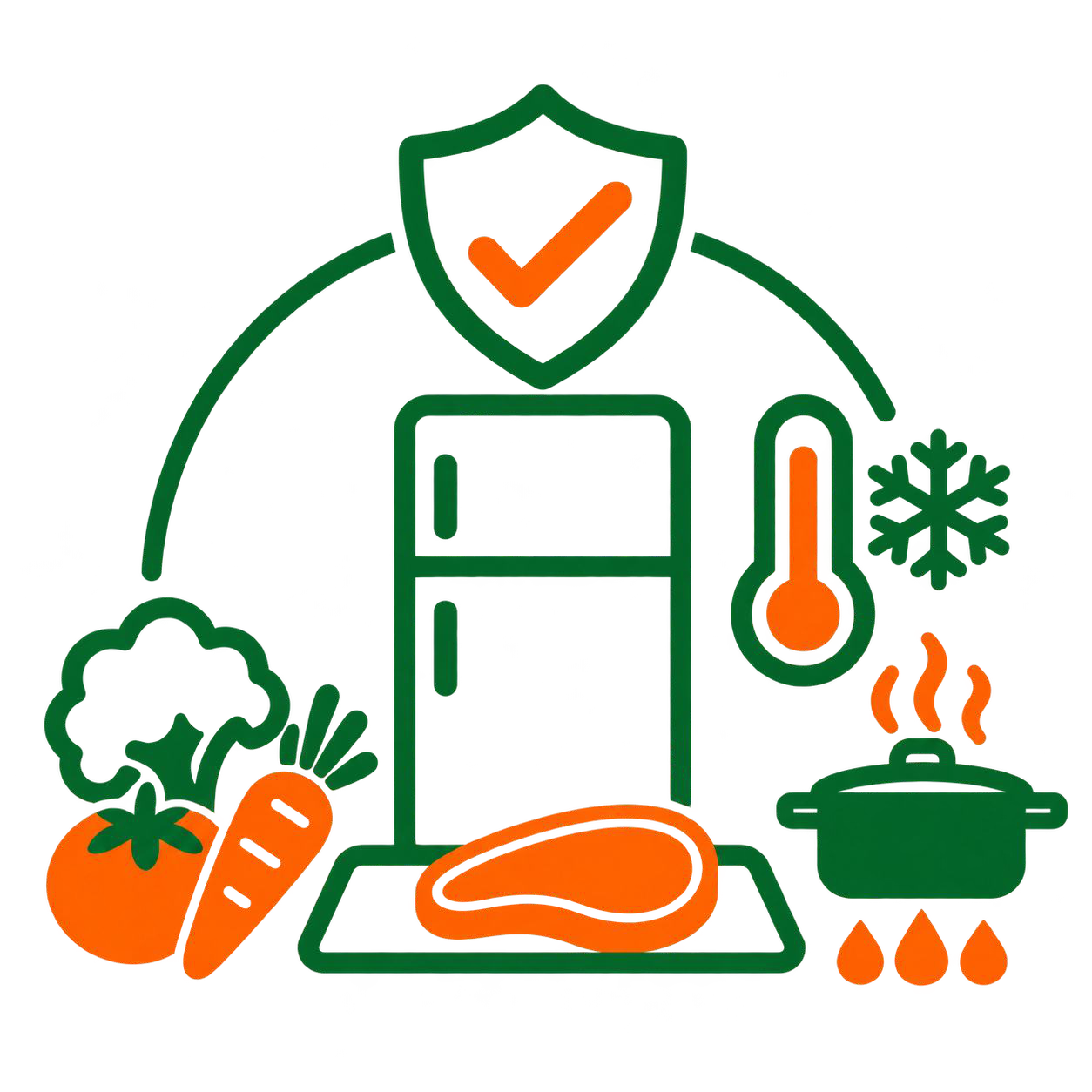
7. Temperature Control
Understand the importance of temperature control during delivery, storage, preparation, cooking, cooling, reheating and service.
2. Food Safety Legislation
Understand key responsibilities that apply to food businesses and food handlers.
8. Personal Hygiene
Learn how effective handwashing, personal cleanliness, protective clothing and good hygiene practices help keep food safe.
3. Food Safety Hazards
Identify common microbiological, chemical, physical and allergenic hazards.
9. Cleaning and Disinfection
Understand how to maintain clean and hygienic premises, equipment and food contact surfaces.
4. Bacteria and Food Poisoning
Learn how harmful bacteria can grow and spread and how food handlers can help prevent foodborne illness.
10. Pest and Waste Management
Learn how good housekeeping, pest prevention and safe waste handling contribute to a hygienic food environment.
5. Food Contamination and Cross-Contamination
Understand how contamination can occur and how to control risks during food preparation, handling and service.
11. Food Premises and Equipment
Understand the importance of suitable facilities, equipment and food contact surfaces.
6. Safe Food Storage and Stock Rotation
Learn how to store food appropriately, manage stock effectively and reduce avoidable food waste.
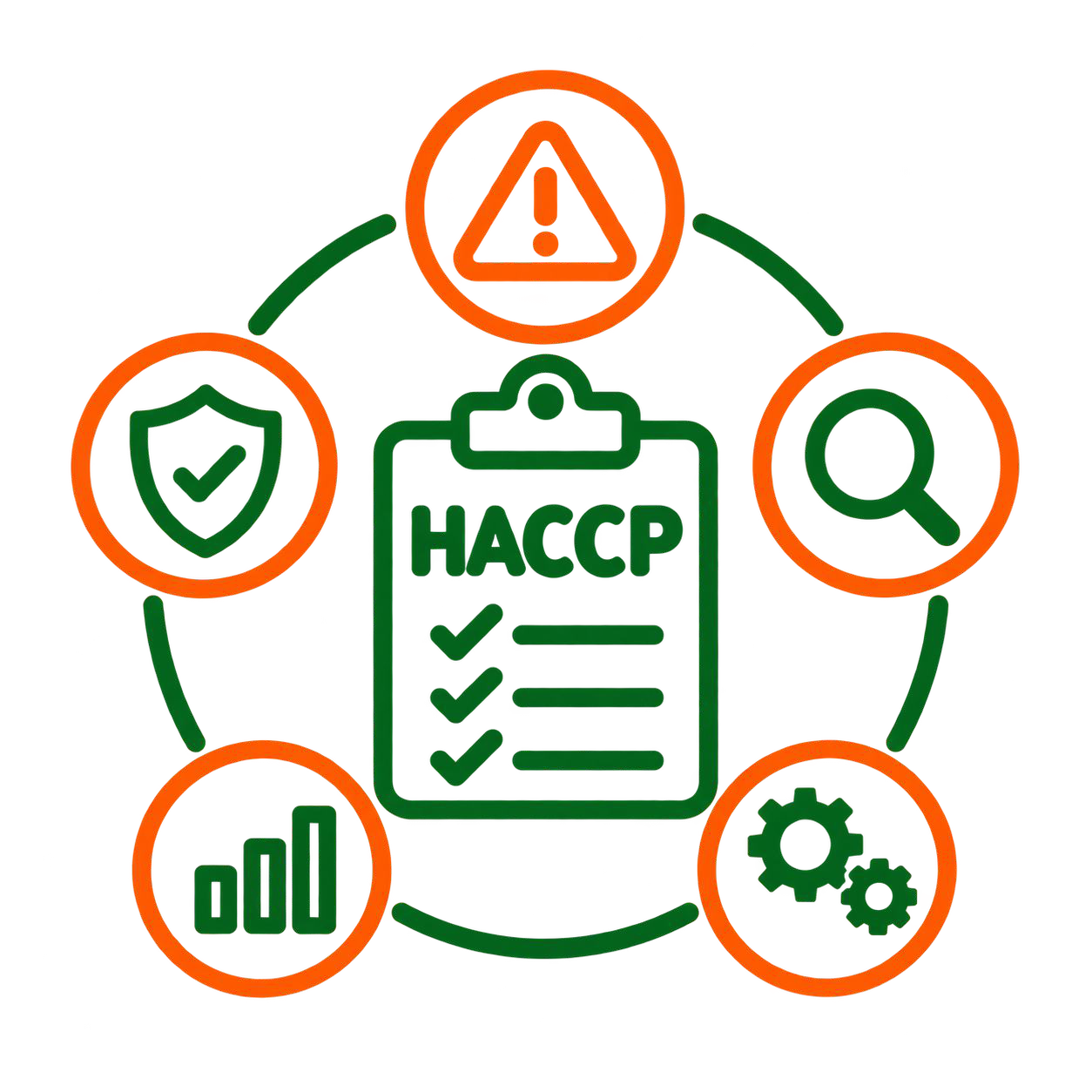
12. Principles of HACCP
Gain a basic understanding of Hazard Analysis and Critical Control Points (HACCP) and how food handlers support food safety controls.
13. Food Safety Responsibilities
Understand your role and responsibilities and how working together helps maintain consistent food safety standards.
Practical Food Safety Knowledge
The course is designed around the realities of food operations. Learners will develop knowledge they can apply to everyday tasks - from receiving deliveries and checking food storage to preparing, cooking and serving food safely.
The aim is simple: to help you recognise risks earlier, make safer decisions and play your part in protecting customers, colleagues and the reputation of the business.
Learning Outcomes
Practical Skills You Can Use Every Day
On successful completion of the course, learners will have the knowledge and confidence to apply good food safety practices in their day-to-day work. They will be able to:
Recognise food safety risks and identify common hazards before they become a problem.
Prevent contamination and cross-contamination during food storage, preparation, cooking, handling and service.
Follow good personal hygiene practices to help prevent food contamination.
Store food safely using appropriate storage conditions, temperature controls and stock rotation practices.
Prepare, cook, cool, reheat and serve food safely, helping to reduce food safety risks.
Understand the principles of HACCP and the importance of following the business's food safety procedures.
Maintain hygienic work areas and equipment by following effective cleaning and disinfection practices.
Recognise the importance of pest control, waste management and good housekeeping in a food environment.
Identify and report food safety concerns so that problems can be addressed before they put customers at risk.
Contribute to a strong food safety culture by working safely and consistently as part of the wider team.
Support the business in meeting its food safety responsibilities and maintaining high standards of hygiene.
Business Benefits
Protect Your Customers, Your Business and Your Reputation
Investing in food safety and food hygiene training is about more than ticking a box. Well-trained staff are an important part of running a safe, professional and trusted food business.
Improve Food Hygiene Standards -
Help staff follow safer food handling, preparation, storage, cooking and cleaning practices consistently.
Reduce the Risk of Foodborne Illness -
Give employees the knowledge to recognise contamination risks and take practical steps to prevent food poisoning.
Reduce Food Waste and Avoidable Costs -
Better understanding of storage, temperature control and stock rotation can help reduce spoilage and unnecessary waste.
Build a More Confident Team -
Well-trained employees are better equipped to identify potential problems and follow the correct procedures.
Protect Your Business Reputation -
Good food hygiene practices demonstrate that your business takes customer safety seriously and can help build customer trust.
Support Legal and Regulatory Responsibilities -
Appropriate training helps businesses meet their responsibility to ensure food handlers are suitably instructed, supervised and/or trained for the work they carry out.
Support Good Food Hygiene Practices and Ratings -
Effective training can contribute to the strong hygiene practices and food safety manage systems that underpin good outcomes under the Food Hygiene Rating Scheme (FHRS).
Reduce the Risk of Food Safety Failures -
A knowledgeable team is better prepared to spot problems early and follow proceduresdesigned to prevent avoidable food safety issues.
Put Your Knowledge into Practice
This is not simply about learning facts for an assessment. It is about understanding how food safety works in the real world and how your actions can affect customers and the business.
By the end of the course, learners should feel more confident about applying safe food handling practices during their normal working day.
Course Information and Key Facts
Depending on your course package, your booking may include:
Classroom-based training
Assessment and examination arrangements
Course learning materials
Qualification and certificate processing
Qualification:Ofqual-regulated Highfield Level 2 Award in Food Safety for Retail (RQF)
Qualification number:603/4940/2
Regulated by:Ofqual-regulated Highfield Level 2 Award in Food Safety for Retail (RQF)
Course format:One-day classroom-based food safety for retail food handlers
Guided learning hours:7
Credit value:1
Validity:3 Years Renewal
Entry requirements:No previous food safety qualification is required.
Please contact us for details of what is included in your chosen course package and current certificate processing times.
Exam Info & Assesment
The qualification is assessed through a multiple-choice examination designed to check your understanding of the key food safety principles covered during the course.
Assessment Format:20 questions completed within 45 minutes
Pass Mark:66% (13 out of 20 questions)
Grading:Pass or Fail
Assessment:
Multiple-choice examination, externally set and marked by Highfield Qualifications
Results:
Completed examination papers are returned to Highfield for marking, with results supplied to the centre afterwards
Certificate:
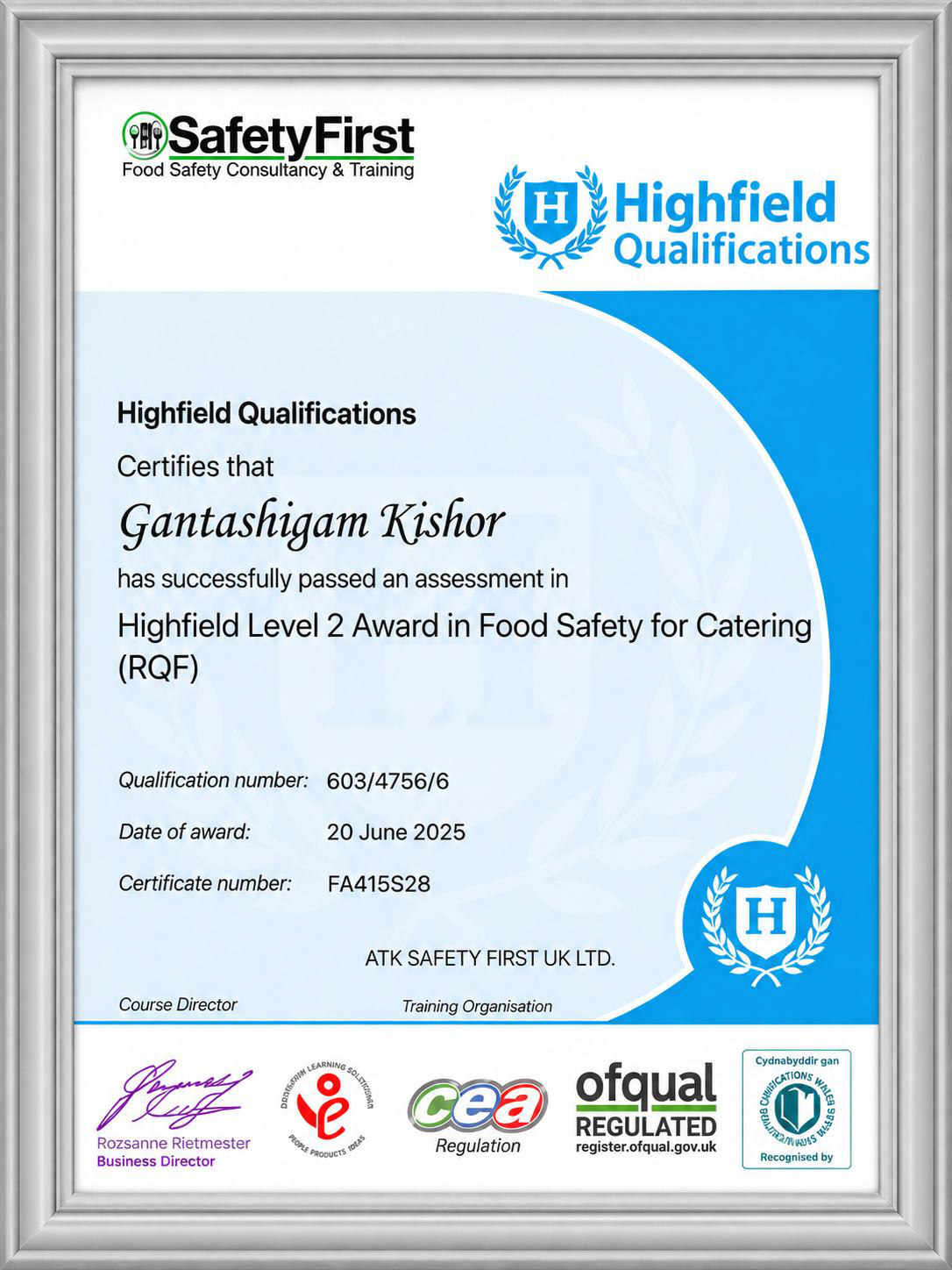
Successful learners receive the relevant Highfield qualification certificate in accordance with awarding organisation and centre procedures
Identification Requirements
For assessment purposes, learners must provide photographic identification. This helps the center verify the identity of the person completing the assessment.
Examples of acceptable identification include:
Valid passport (any nationality)
Signed UK photocard driving Licence
Valid HM Forces | Police warrant card
Current employer photographic ID
Student photographic ID
Other suitable photographic identification accepted in accordance with center and awarding organisation requirements
Helpful reminder
Make sure the photo and name are clearly visible on the ID you bring.
Bring original identification rather than a screenshot or photocopy where possible.
Please contact us before the course if you are unsure whether your ID will be accepted.
Recommended Reading and Training Materials
The following Highfield Qualifications publications are recommended to support preparation for the Level 2 Food Safety assessment.
The Food Safety Handbook (Level 2)– R. A. Sprenger,Highfield
Hygiene Sense– R. A. Sprenger, Highfield
These resources reflect Highfield qualification standards and provide focused revision across the core areas of food safety.
Food hygiene and personal cleanliness
Contamination and cross-contamination control
HACCP principles
Safe food handling, storage, and temperature control
Further Progression:
Successfully completing the Level 2 Award in Food Safety for Retail (RQF) can open the door to further training and career development in food retail, food-to-go, catering and wider hospitality environments.
Learners may choose to progress to:
Level 3 Award in Supervising Food Safety in Catering – ideal for supervisors, team leaders and those responsible for overseeing food safety practices.
Level 3 Food Safety Qualifications – suitable for learners who want to develop more advanced knowledge of food safety management and legislation.
Hospitality and Catering Qualifications – useful for developing specialist skills and knowledge for a wider range of roles within the hospitality and catering industry.
Apprenticeships and Vocational Qualifications – a practical route to continue professional development through work-based learning and recognised qualifications.
Further study can help learners build their knowledge, take on greater responsibility and progress towards supervisory or management roles within food retail, catering or hospitality settings.
FAQ
Who is this Level 2 Food Safety Course for?
It is designed for people who prepare, handle, display, sell or store food as part of their work. It is suitable for food handlers in supermarkets, convenience stores, delicatessens, bakeries, butchers, food-to-go counters, cafés within retail settings and other food retail environments.
Do I need previous qualifications or experience?
No. There are no previous qualifications required. The course is suitable for beginners, new employees and experienced food handlers who want to develop or refresh their food safety knowledge.
Is this a recognised Food Hygiene Certificate?
Successful learners achieve the Ofqual regulated Highfield Level 2 Award in Food Safety for Retail (RQF), a recognised qualification that demonstrates achievement of the relevant learning outcomes and assessment requirements for retail food safety.
Why does Ofqual regulation matter to employers?
Ofqual regulation gives employers confidence that the qualification has been developed, assessed and quality assured against recognised standards. For food businesses, this can support due diligence, safer food and allergen practices, consistent staff training records and clear evidence that employees have achieved a recognised level of competence for their role.
How is the course assessed?
The qualification is assessed by a multiple-choice examination. You will have 45 minutes to answer 20 questions and need to achieve at least 13 correct answers (66%) to pass.
Do I legally need a food hygiene certificate to work with food?
There is not a universal legal requirement for every food handler to hold a specific named certificate. However, food businesses must ensure that food handlers are appropriately supervised, instructed and/or trained in food hygiene and food safety matters relevant to the work they carry out. Many employers use a recognised Level 2 qualification as appropriate training for food handlers.
How long is the qualification valid?
The qualification does not have a universal legal renewal period. Employers should assess when refresher training is appropriate based on the employee's role, changes in responsibilities, business procedures, legislation and ongoing training needs.
Does this course cover food allergens?
The course includes food safety hazards and the importance of preventing contamination. However, businesses may also need dedicated food allergen awareness and allergen management training depending on the roles and responsibilities of their staff.
Is this course suitable for supervisors and managers?
The Level 2 qualification is primarily aimed at food handlers. Supervisors, managers and those responsible for overseeing food safety may benefit from progressing to an appropriate Level 3 food safety qualification.
Can I book training for a group of employees?
Yes. Group bookings are available. Contact us to discuss your staff numbers, preferred dates and training requirements.
Can the course be delivered at our workplace?
Classroom-based training can be arranged for groups, subject to availability and suitable arrangements. Contact us to discuss your preferred location and requirements.
What identification do I need for the assessment?
You will need suitable photographic identification. A valid passport, signed UK photocard driving Licence or other accepted photographic ID may be used. Please contact us in advance if you are unsure about your ID.
Will completing the course guarantee a higher Food Hygiene Rating?
No. A food safety qualification does not guarantee a particular Food Hygiene Rating. However, properly trained staff can contribute to effective food safety practices, good hygiene standards and a stronger overall food safety management system.

 0800 123 4567











 The course is suitable for new employees, experienced food handlers and people preparing to enter the catering, hospitality or food industry.












 Learning Outcomes
 Business Benefits













 Qualification:Ofqual-regulated Highfield Level 2 Award in Food Safety for Retail (RQF)
 Please contact us for details of what is included in your chosen course package and current certificate processing times.


 Assessment:
 Results:
 Certificate:







 Make sure the photo and name are clearly visible on the ID you bring.